
KLYRA: CULTURE AS A SERVICE FOR LONDON WELLNESS BRANDS
How a structured intermediary turns run clubs, reformer studios and boxing gyms into a measurable acquisition channel for premium wellness brands.
Reading time
14 min read
Published
BY
Veer Benepal

Tags
Venture / Go-To-Market / London Wellness
Read the Full Report (PDF)
01
Executive Summary
Klyra is a structured intermediary connecting emerging luxury-wellness brands with high-trust London lifestyle communities: run clubs, reformer circles, boxing gyms, and wellness collectives. It charges brands a per-activation fee in exchange for physical product trial at the moment of highest emotional receptivity, bundled with post-event performance data that justifies the spend.
02
Venture Overview: Definition & Mechanism
Klyra is a structured intermediary connecting emerging luxury-wellness brands with high-trust London lifestyle communities: run clubs, reformer circles, boxing gyms, and wellness collectives. It charges brands a per-activation fee in exchange for physical product trial at the moment of highest emotional receptivity, bundled with post-event performance data that justifies the spend.
Target market. The venture addresses a genuine two-sided problem. Brands face a Digital Customer Acquisition Cost crisis, with online acquisition costs rising sharply while returns diminish. Collectives, meanwhile, are growing rapidly but lack the infrastructure to convert that growth into brand partnerships without administrative burden or identity risk. No mainstream solution currently combines trusted audience access, recurring local activations, and measurable outcomes for early-stage brands.
Key opportunity. Klyras beachhead is central London run clubs of 100-500 members, validated through customer discovery interviews with collective organisers. Financially, the model reaches break-even in Year 1 under a conservative pilot scenario, with a clear pathway to platform-level margins through three proprietary innovation modules.
Feasibility verdict. The overall feasibility verdict is positive. Customer demand is validated, unit economics are sound, and the competitive moat is defensible. A customer segment pivot from nightlife collectives to the wellness-lifestyle scene strengthened both brand alignment and the regularity of activation opportunities. The immediate priority is executing Q3 2026 pilot activations to convert proven demand into live performance data.
Klyra sits in the gap between two sides of Londons wellness-lifestyle economy that need each other but have no working channel between them. On one side, emerging premium CPG brands are burning capital on opaque online advertising, chasing consumers they cant measure or form trust with. On the other, run clubs, padel circles, boxing gyms and wellness collectives have created weekly rituals that house these exact consumers in real life, in spaces of peak emotional receptivity. Klyra is the connective layer — a platform of cultural matchmaking, targeted activations and closed-loop attribution.
Three components are fundamental:
The Partner Portal — replaces the usual tangle of WhatsApp threads with one interface covering event scheduling, shipping, legalities and payments.
The Cultural Alignment Engine — scores brand-to-community fit from 0-to-100 across four dimensions (aesthetic, audience profile, scene positioning and past performance), so founders can make decisions based on data rather than instinct.
The Phygital Attribution Stack — converts post-event QR scan data into conversion tracking and LTV projections, giving brands something concrete to point to when measuring ROI.
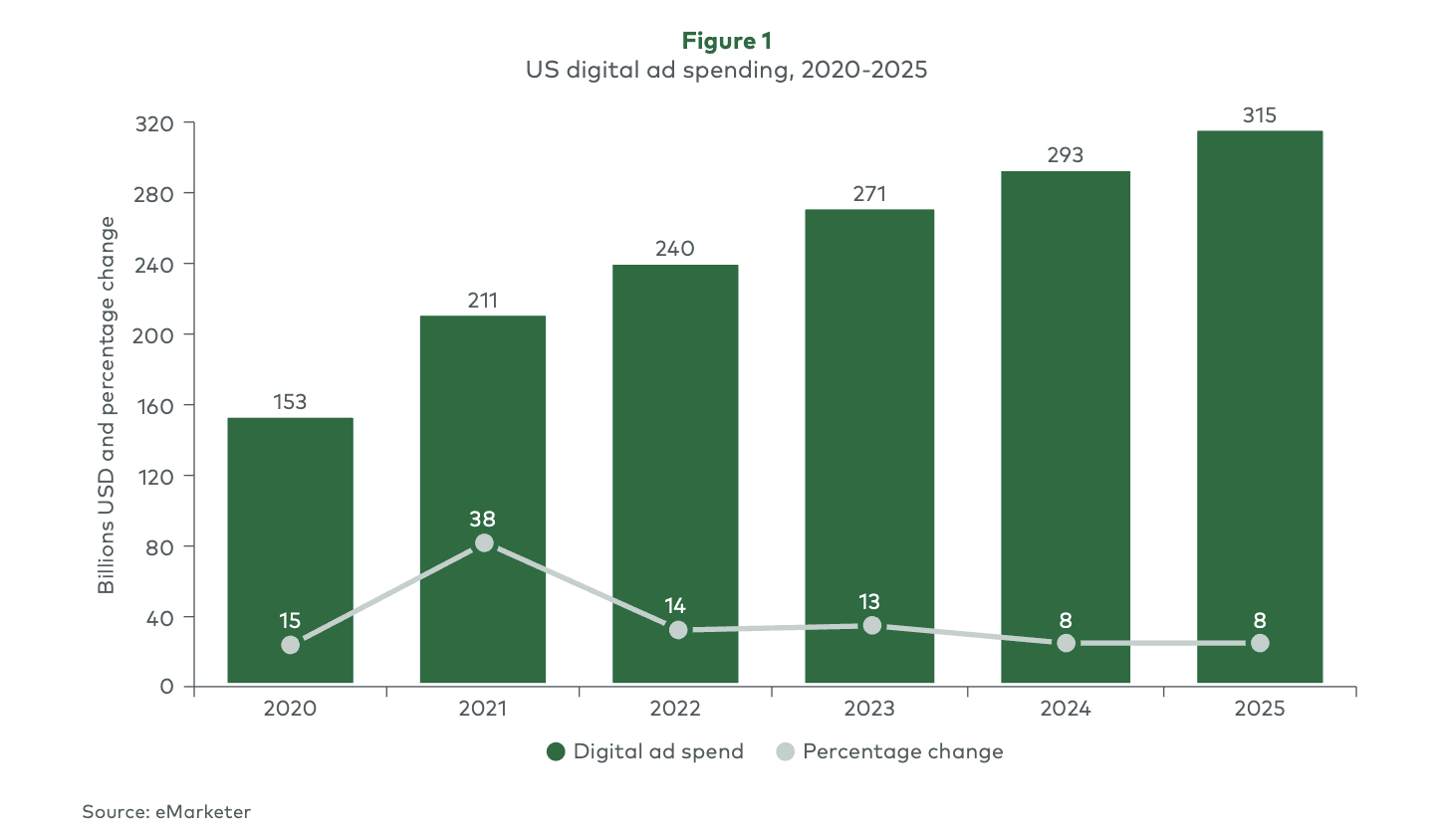
Why now. Digital acquisition costs have risen quickly: IAB research indicates 50-60% of signal fidelity from third-party identifiers has already been lost, shrinking addressable audiences and forcing brands to spend more for diminishing returns. L.E.K. Consulting finds that scaling through digital marketing is now "prohibitively expensive" as social CPMs and search CPCs continue a sharp year-on-year ascent.
Physical trial is Klyras answer, and the academic case is strong — in-store sampling produces both immediate and sustained long-term sales impact, with effects on sales shown to be greater than other forms of marketing, including advertising (Chandukala, Dotson and Liu, 2017).
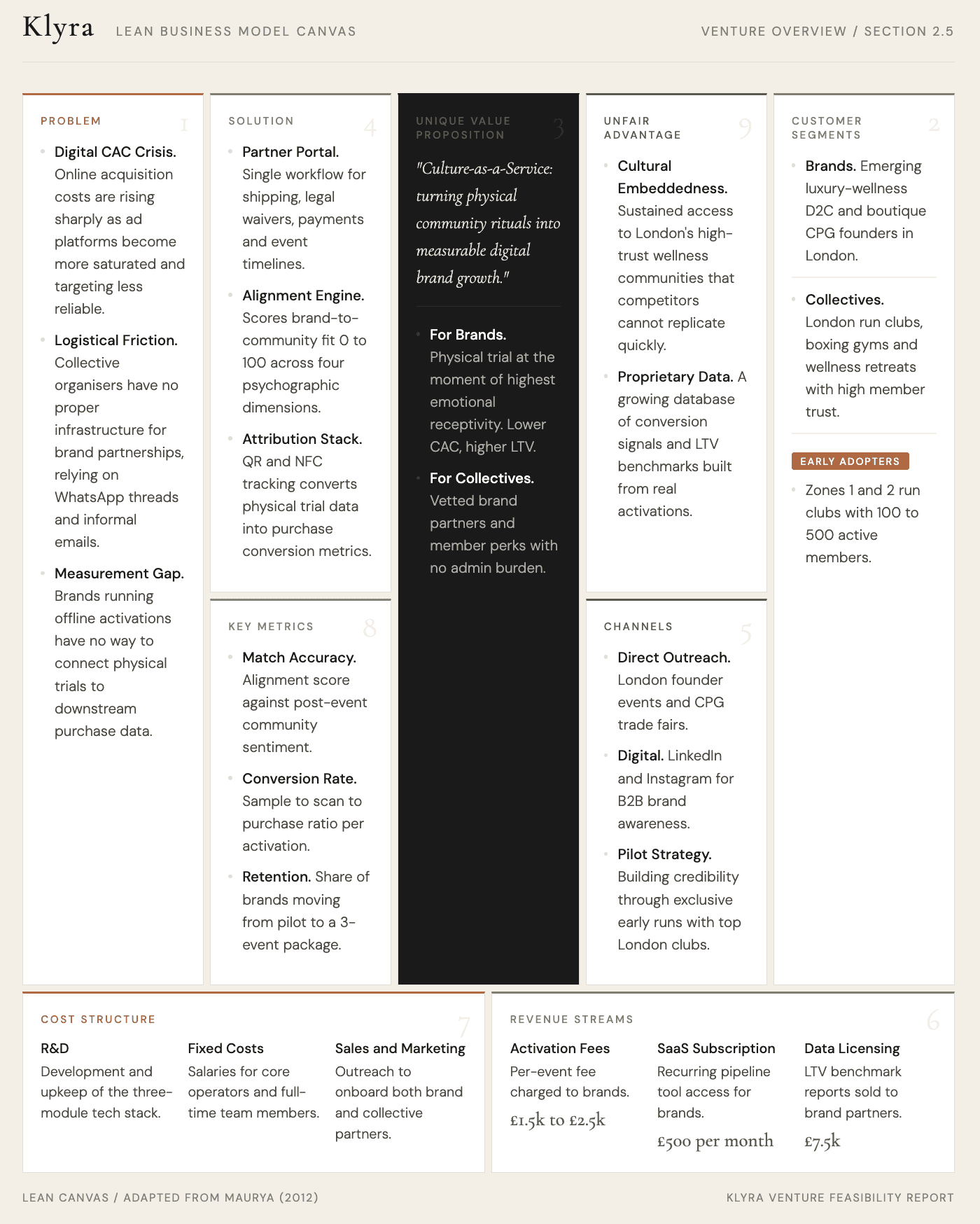
Business model. Klyra charges brands a per-activation fee bundled with post-event attribution reporting, converting offline trials into measurable customer-acquisition data. Value capture sits in bringing structure to what is currently a fragmented, informal market, where brand partnerships typically run on personal relationships and handshake agreements. Longer term, the ambition is to operate as a cultural sponsorship holding company, building proprietary access to these communities as an asset in its own right — built around the Lean Business Model Canvas, with Blanks Customer Development methodology pushing validation before serious resource commitment.
03
Customer Need & First Customers
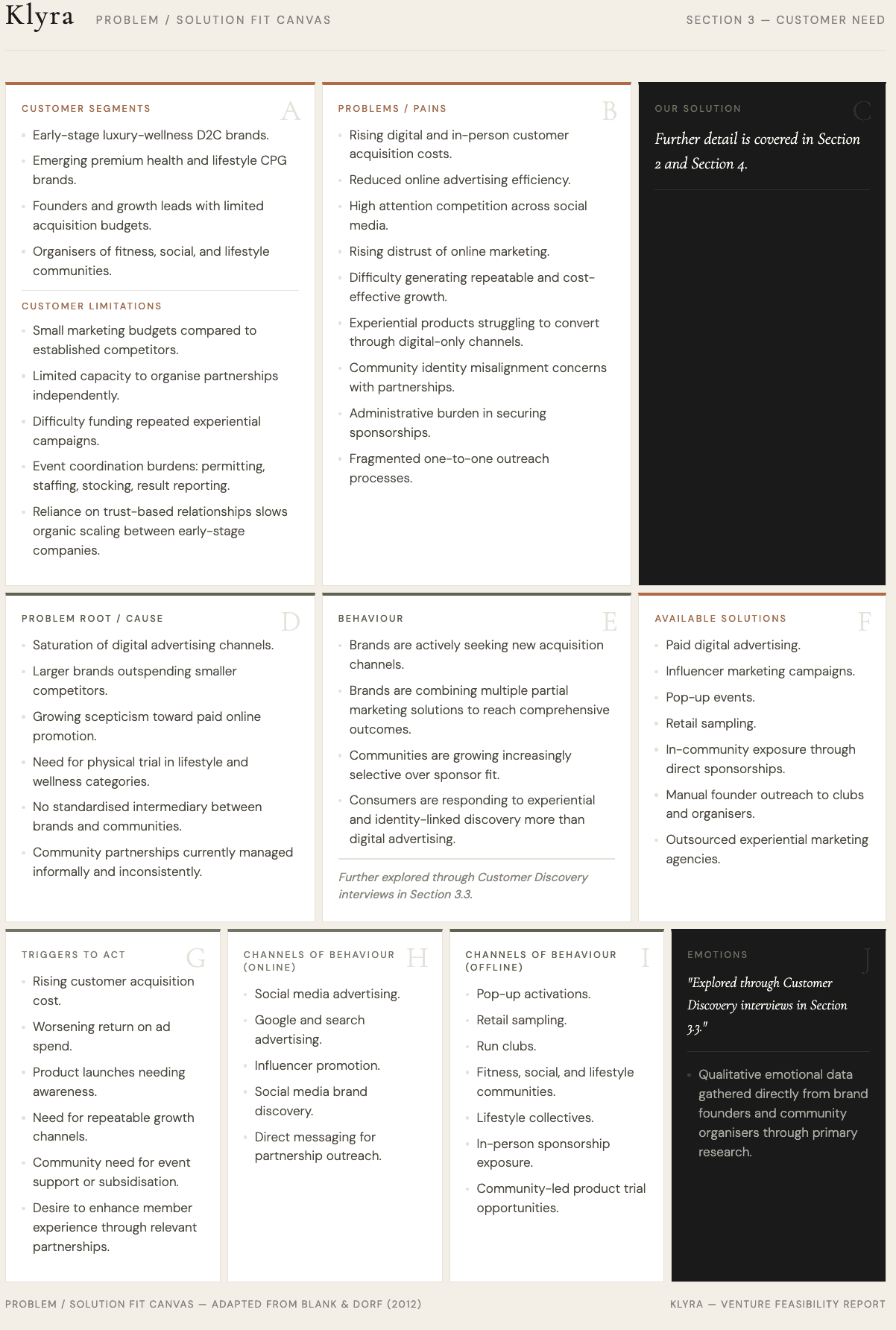
Early-stage, premium-wellness D2C and CPG brands face rising customer acquisition costs, reduced online advertising efficiency due to distrust, and high competition for attention across social platforms — all while facing significant advertising budget disparities compared to larger corporations. At the same time, social, fitness and lifestyle collectives are attracting greater participation than ever, thriving on group culture, yet pains to partner together persist: identity alignment, monetary cost and event coordination friction.
Existing alternatives fall short. Experiential agencies such as Amplify or Jack Morton operate at scale but require five- or six-figure minimums. Influencer marketplaces like ShopMy, Aspire and LTK are digital-content-first and parasocial by nature. Neither reaches ritual-centred micro-influencers — run club hosts, pilates leads, collective founders — whose magnetism comes from in-person community presence. Direct founder outreach remains unstandardised, ad hoc and trust-dependent. No mainstream option combines trusted audience access, recurring local activations, low operational friction and measurable outcomes.
Interview findings. Primary research using the Customer Discovery framework covered founders and growth leads at Stryke Systems, Suna, Could, Cheb and the Ellipsis Project, alongside organisers at Move to Meet, BXR Boxing London, Founders Run Club and Cloud Twelve.
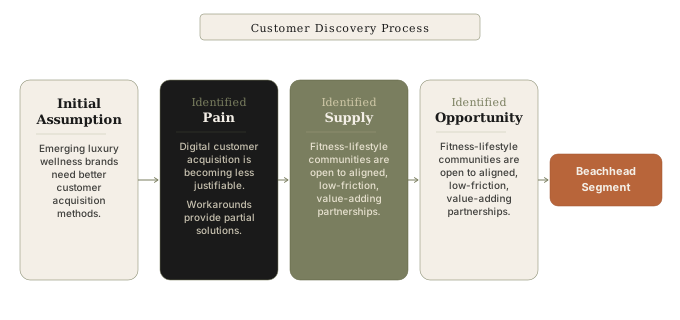
Brands confirmed the digital-CAC crisis and a desire for authentic in-person exposure limited by internal capacity. Communities showed high willingness to collaborate with experientially relevant brands, while strongly resisting any partnership risking misalignment with communal identity — administrative simplicity and event subsidisation mattered more than merchandising. Both sides agreed that fragmented, one-to-one outreach was the core blocker, and both expressed interest in a trustworthy intermediary.
Beachhead segment. The recommended beachhead is central London running clubs (Chelsea Running Club, Brixton Run Club, etc.) in Zones 1-2, with 100-500 regular weekly participants. Stravas 2023 Year in Sport found run-club participation grew 59% globally year-on-year, with womens joins up over 40% — predominantly health-conscious, socially-active 18-35 year-olds with discretionary purchasing power. Run clubs offer natural experiential-trial opportunities through pre- and post-run consumables and apparel, and research shows sponsorship at small-scale sporting events strengthens brand identity and future purchase likelihood, especially where participants closely identify with the community.
04
Competitive Advantage & Innovation
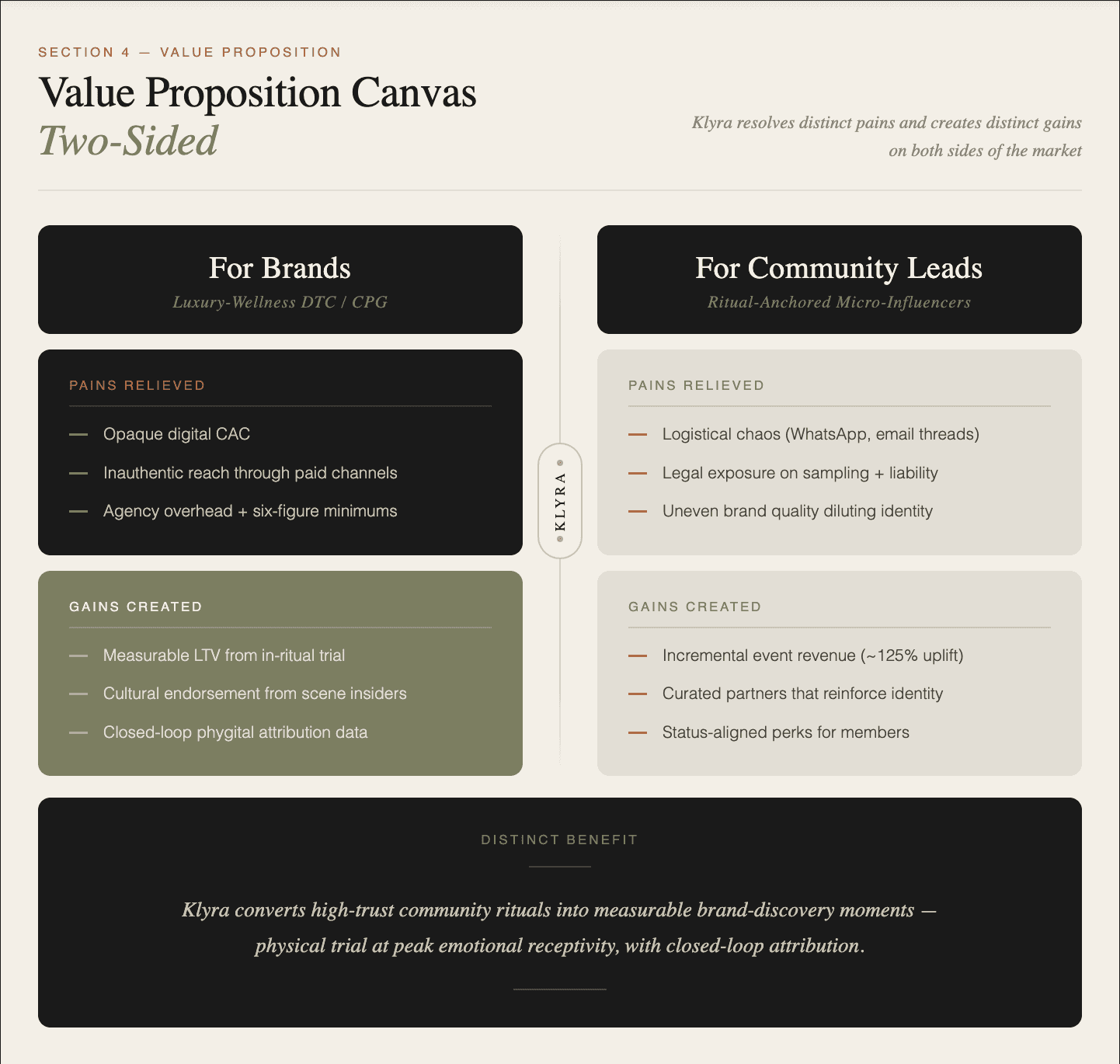
Value Proposition Canvas — mapping pains and gains for brands and community partners.
05
Market Opportunity & Commercial Potential

The Innovation Stack — three-layer moat: Partner Portal (Workflow), Cultural Alignment Engine (Curation), and Phygital Attribution Stack (Attribution).
The UK consumer wellness economy is estimated at approximately £30 billion (Mintel, 2024) and growing at high single digits. Klyras addressable market combines UK experiential marketing (~£1.0-1.5B) and UK lifestyle/community sponsorship (~£1.0-1.5B).
TAM — UK Wellness + Experiential Marketing: £2-3B annually
SAM — Community-Led Activation, UK: £200-450M nationally; £80-180M in central London
SOM — Klyras Realistic 18-Month Capture: ~£336K (~35% of £960K steady-state)
Built bottom-up from ~40-50 qualifying Central London collectives at 2 paid activations per month and £1,000 net revenue per activation, the steady-state Serviceable Obtainable Market is ~£960K annually — deliberately conservative at 0.5-1% of the London SAM.
Revenue model. Pricing of £2,000 per activation sits below boutique experiential agencies (£3,000-£8,000) and above one-off influencer placements (£500-£3,000).
Scenario A — Agency Reality (current pilot): 5 collectives × 1 activation/month = £120K annual revenue, break-even in Year 1 (~£6K net profit). Scaled to 20 collectives × 2/month = £960K revenue, ~£138K net profit (~14% margin).
Scenario B — Innovation-Enabled Platform (18-month vision): adds SaaS subscriptions and data-licensing revenue lines, reaching ~£1.05M total revenue and ~£260K net profit (~25% margin).
Growth & risk. Growth follows four vectors — geographic (London → Manchester → NYC → LA), vertical (wellness into beauty, fashion, hospitality), product (agency → platform → data business), and M&A roll-up of collectives. Key risks include a working-capital gap from the cash-conversion cycle, revenue concentration in anchor collectives, disintermediation risk (mitigated by Founding Partner exclusivity), regulatory review for product sampling and event liability, key-person dependency, and summer-heavy seasonality requiring indoor collective types through winter.
06
Growth, Roadmap & Product in Action
Secondary research confirms digital acquisition is costlier and less efficient than experiential marketing for recall, purchase intent, and brand identity. Interview-based primary research validated both sides of the market — D2C/CPG brand pain points and community collectives' desire for authentic partnerships currently blocked by cultural misfit and admin burden.
From initial plans pairing nightlife collectives with CPG brands, Klyra executed a customer-segment pivot to London's wellness-lifestyle scene — run clubs, reformer circles, padel, sauna-social formats — offering a steadier cadence, cleaner brand alignment, and a stronger pool of high-frequency rituals. Post-pivot evidence supports persist: white-space positioning against agencies and influencer marketplaces, a defensible four-asset moat, unit economics with clear payback, and secured early pilot interest across the beachhead.
The Partner Portal, Cultural Alignment Engine and Phygital Attribution Stack below are live product demos — the actual interface brands and collectives use to run activations end-to-end.
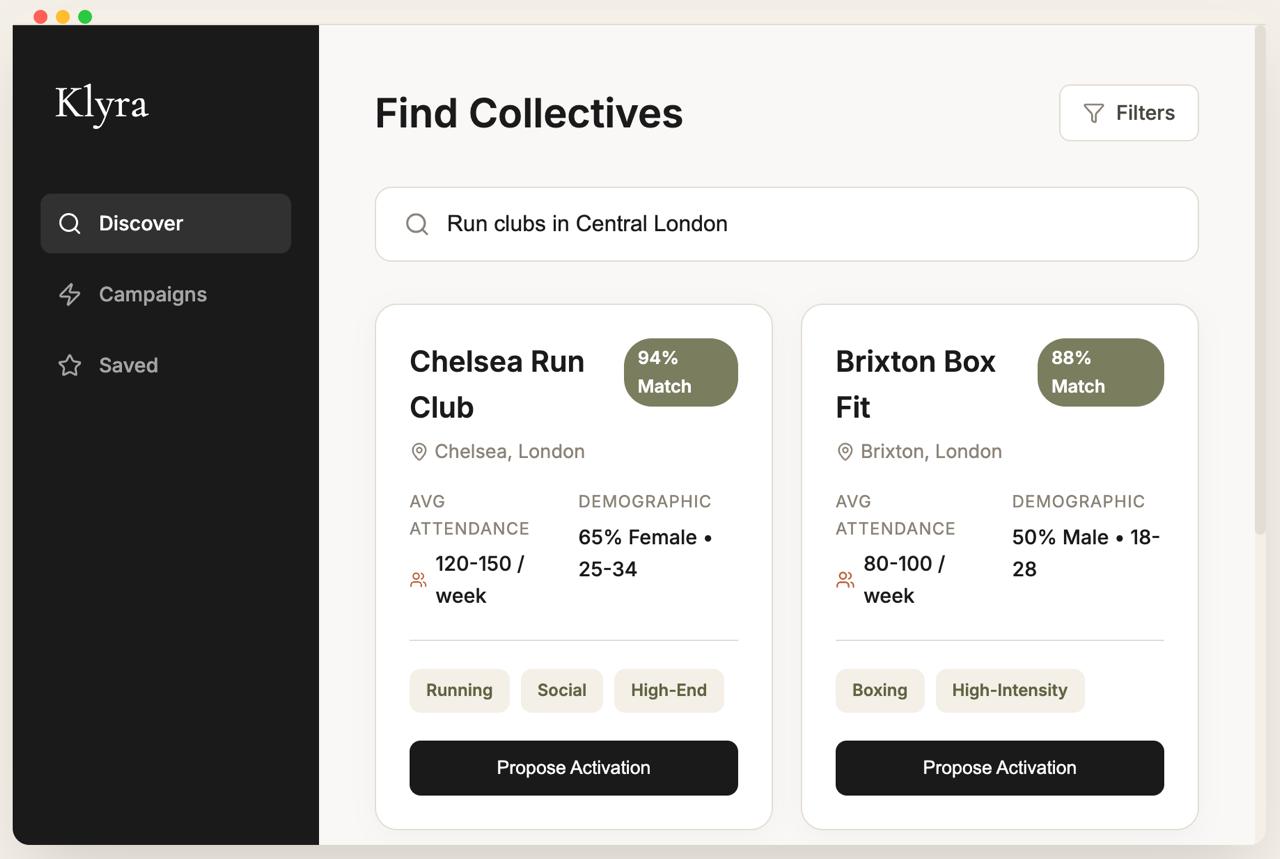



Brand Discovery & Collective Matching interface. · Campaign Management & Performance Tracking dashboard. · Partner Portal interface for logistics and shipping management.

07
Overall Feasibility & Recommendation
This report demonstrates that Klyra is not only a promising concept but a commercially viable venture. The investigation confirms a clear market gap for a professionalised intermediary bridging premium brands and high-trust lifestyle communities. By standardising a currently fragmented activation process, the venture is positioned to transition from an initial services model into a scalable, high-margin platform.
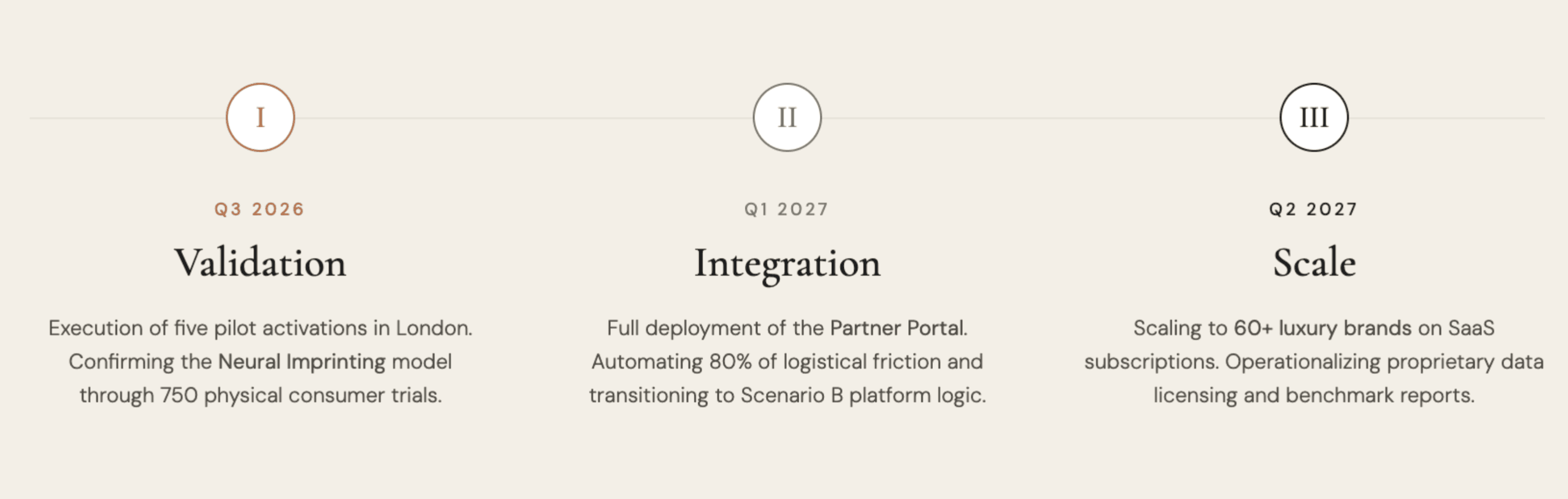
Immediate recommendation: proceed with Q3 2026 pilots to establish the performance data needed to validate the business model before full deployment. Subsequent milestones focus on transitioning to an automated platform, reducing manual review work while scaling — a disciplined path to market entry that positions Klyra as a competitive actor within the experiential-discovery sector.
08
Pilot Partners & Companies Onboarded
Klyra's customer discovery and early pilot process onboarded a founding cohort of premium-wellness brands and collectives across London's run, boxing and reformer scenes:
Stryke Systems - stryke.uk
Could - drinkcould.co.uk
Cheb - chebclothing.com
The Ellipsis Project - theellipsisproject.co.uk
Alongside collective partners Move to Meet, BXR Boxing London, Founders Run Club and Cloud Twelve - the community network that will host the pilot activations.
About the Author
Veer Benepal is the ideator behind Klyra, working at the intersection of brand strategy, go-to-market design, and London's wellness-lifestyle scene. This report was produced as a full venture feasibility study, combining primary customer-discovery research with applied strategic frameworks - the Lean Business Model Canvas, Value Proposition Canvas, VRIO, and Porter's Five Forces - to pressure-test Klyra from first principles.
References